
The Glass is Full
How the Public Needs to Rethink AI Development
By

A number of weeks ago, a dear friend sent me a video of a philosopher dismissing the capabilities of image-generation systems with a simple example: the AI was unable to generate a glass filled precisely to the brim with wine. This example vividly demonstrated the limitations of diffusion models, systems trained on vast datasets to create images by progressively denoising frames based on user prompts.
The limitation was inherent in these diffusion models. They struggled to create precise images of scenarios or objects rarely or never explicitly encountered in their training data. An even more significant issue was their notorious difficulty in accurately rendering text, as these models treated letters and words as visual objects like any other, leading to distorted and unreadable results.
Think a Model Ahead of Time
Enter OpenAI’s new ChatGPT-4o image-generation system, and suddenly these issues appear resolved. Unlike diffusion models, which gradually refine an image by repeatedly removing visual noise based on user prompts, autoregression creates images step-by-step, predicting each new pixel or area directly based on the pixels generated so far—akin to writing a story one word at a time. This makes autoregressive models particularly adept at precision and detail, dramatically improving accuracy in both image content and embedded text. You can now effortlessly generate glasses of wine filled exactly as desired, and crucially, texts within images are accurate and clearly legible. This new model uses autoregression—a method that sequentially predicts pixels or image segments based on prior outputs, rather than denoising a canvas. Within just 24 hours of its release, this innovation significantly transformed user interactions with chatbots and image-generation AI.
This illustrates a broader trend in the AI world: the general public often seizes upon isolated shortcomings to dismiss an entire technology. Yet, these seemingly significant flaws are typically rendered obsolete within mere months as newer, more advanced models emerge.
Thinking One Step Ahead
When I was learning guitar, my father always emphasized that a good performer doesn’t dwell on the bar they’re currently playing—they’re already thinking about the next. During my research for this article, I found similar insights shared by legends such as John Coltrane, Ayrton Senna, and Wayne Gretzky, all emphasizing anticipation and foresight as hallmarks of true expertise in their profession.
- Wayne Gretzky
Professionals in any field possess the ability to anticipate developments—to see clearly where things are headed, rather than where they currently stand. This skill, born from deep immersion and understanding, is particularly evident in AI research today.
Historical Context and Accelerating Progress
Those familiar with artificial intelligence know its history of winters and springs since its inception at Dartmouth in 1956. The most notable “AI winters” occurred in the 1970s and 1990s when ambitious promises repeatedly fell short. But with the arrival of ChatGPT, AI reached unprecedented commercial success.
Today’s advanced models leverage significant leaps in computing power, particularly GPU acceleration driven by companies like Nvidia, to offer interactive and powerful interfaces directly accessible to the public. Demand continues to surge, fueling ever-greater investments in software and hardware research.
Industry debates no longer revolve around whether capabilities like artificial general intelligence (AGI) or sophisticated humanoid robots will emerge, but rather about how soon. AI labs now unveil groundbreaking innovations almost weekly. Indeed, the weekly meetings I attend to discuss AI’s implications for coding, where we dedicate substantial time analyzing recent papers and models, regularly extend beyond the two allocated hours simply due to the pace of advancements.
Why the Public Needs to Adjust Its Thinking
For those deeply engaged with AI, it’s clear that accurately understanding the technology involves extrapolating multiple rapidly advancing trends to predict where we might be six months or a year from now. If AI were merely another niche skill—like sports or music—only specialists would require such predictive clarity.
But AI is not a niche sport. Its impact on human life is profound and extensive. For months, I’ve conversed with academics unaware of AI’s significant capabilities in coding and complex problem-solving. Many dismiss its potential based on isolated errors or outdated experiences, ignoring clear trajectories of rapid advancement.
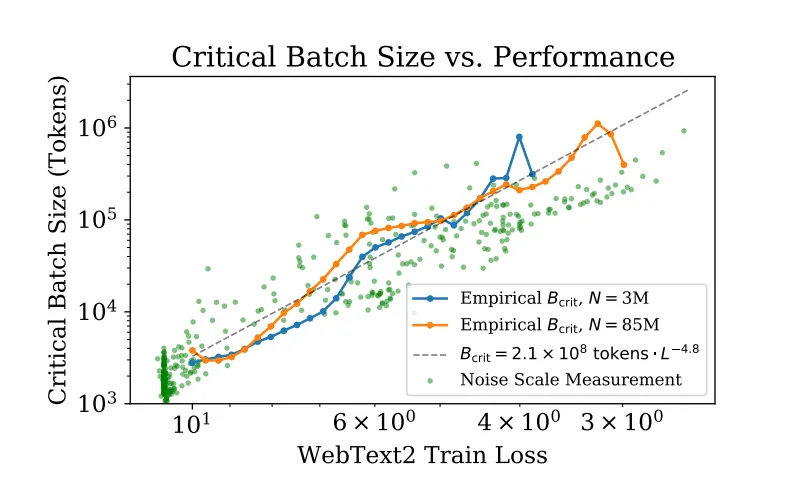
The reality is that AI will revolutionize nearly every educational domain. My own field, computer science, might look entirely different—or even cease to exist as we currently know it—in just two or three years. Fields like diagnostics, chemical engineering, drug development, and education face similar transformative potentials. Yet, professionals in these areas often quickly dismiss future implications based on outdated experiences with older models.
Two years ago, someone first asked me what field their child should study at university. Initially surprised by this question, I’ve since heard it many times from concerned parents fearing their child’s future obsolescence. My advice then remains the same today: no field is completely safe from AI-driven disruption. Thus, I recommend students pursue whatever genuinely excites them—an answer I continue to stand by.
The Glass is Full Now What?
We are quickly nearing a point where AI will consistently surprise us with its capabilities, surpassing our previous expectations. I believe we still have perhaps a year or two before reaching the point where it will surpass all possible expectations surpassing all human capabilities. If the general public wishes to adequately prepare, they must significantly shift their mindset—not by meticulously following every research paper or extrapolating trends, but by recognizing current AI systems as merely primitive precursors to the vastly superior versions that will soon redefine every aspect of our daily lives.
The glass is full to the brim now, and the notion of continuously finding minor faults in AI models to dismiss them no longer productive. Instead, recognizing that current AI systems are merely early indicators of future capabilities is far more constructive. To correctly prepare for the future the public would benefit from embracing a more practical mindset, understanding today’s AI as the simplest version of what will soon significantly transform our lives. Adapting effectively will require flexibility, curiosity, and openness to change, enabling the whole of society to be ready for the exciting times ahead.