
The Post DeepSeek World
A brief look into how Deepseek works and how its release can impact the global AI race
By

About a week ago, on January 22, I came across some news on X about a newly published paper on a Chinese model from the slightly mysterious AI lab DeepSeek. The research lab claimed that their model, DeepSeek r1, had scored similarly OpenAI’s o1 model, which at the time was the strongest reasoning model available to the public. I was quite intrigued by the numbers and downloaded the paper without glancing too deeply at it, planning to read it over the weekend.
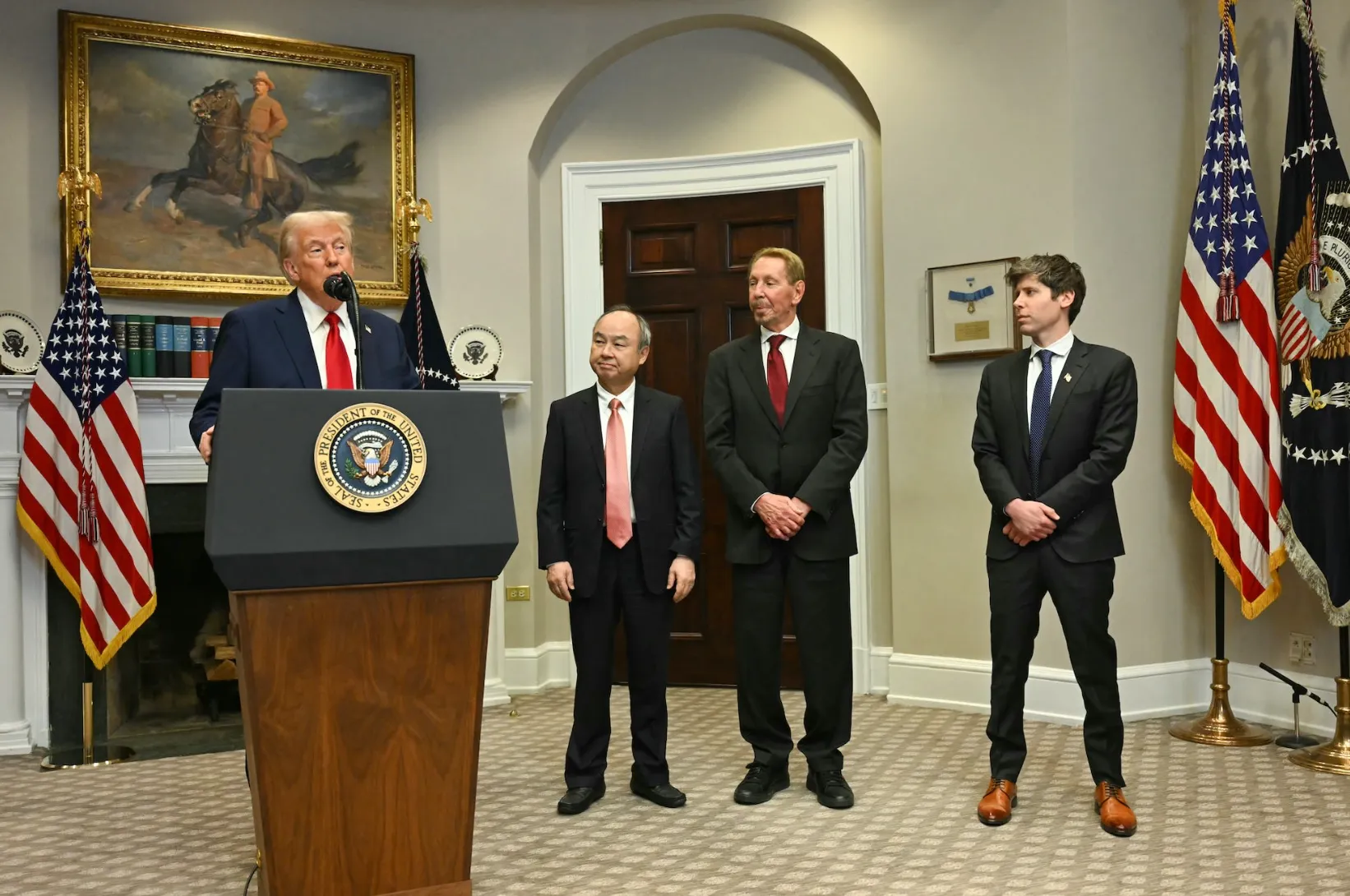
The next day in passing, I mentioned it to a few friends, including two journalists, as an impressive feat. But, most of those conversations were just an excuse to air my frustrations over the EU’s irrelevance and lack of competitiveness in AI, especially in light of the announcement from SoftBank, Oracle, and OpenAI, alongside President Trump, to invest $500 billion in Project Stargate, a new AI company focused on building cutting-edge infrastructure and models.
In retrospect, it’s easy to see that I should have paid more attention to what was coming out of China. As one of my journalist friends later pointed out, I could have tipped him off a four days before the news cycle caught up—if only I had actually dug into the DeepSeek paper earlier. Because, as it turns out, they had done something that fundamentally undermined one of the core assumptions driving American AI labs: the belief that more compute was the only path forward to stronger models. DeepSeek R1 performed on the same level as OpenAI’s best reasoning model—with a reported training cost of just $6 million.
What followed in the next week—as I’m sure you know, dear reader—was close to hysteria in the AI world. By the time I got around to reading the paper on Saturday, X was already buzzing with panic, with people calling this AI’s “Sputnik moment,” claiming the model was stolen (or, as we call it in the biz, coping), or outright refusing to believe that DeepSeek could have pulled this off with such the budget and compute power that they claimed.
For me, the penny dropped the moment I finished reading the paper. And while I think much of the coping and the Sputnik comparisons are overblown, this model represents one of the most important turning points in AI since ChatGPT was first released two and a half years ago.
How DeepSeek’s r1 Works
DeepSeek-r1’s real breakthrough isn’t just in its performance (which was slightly below OpenAI’s reasoning model), it’s in how cheaply that performance was achieved. Unlike OpenAI’s models, which rely heavily on vast amounts of supervised fine-tuning (SFT) and massive compute budgets, DeepSeek took a different approach: they used pure reinforcement learning (RL) from scratch. (see appendix A and B if you are interested in reading about RL and SFT)
The initial version, DeepSeek-r1-Zero, was trained using nothing but RL, with no supervised data at all. Instead of feeding it human-labeled examples, they let the model self-improve through trial and error, using DeepSeek-V3-Base (another highly impressive model comparable to Meta’s latest Llama models) as a starting point. This method alone led to a massive improvement in reasoning ability, taking the model’s pass@1 score on AIME 2024 from 15.6% to 71.0%. However, this early version had serious readability issues and would sometimes mix languages mid-response.
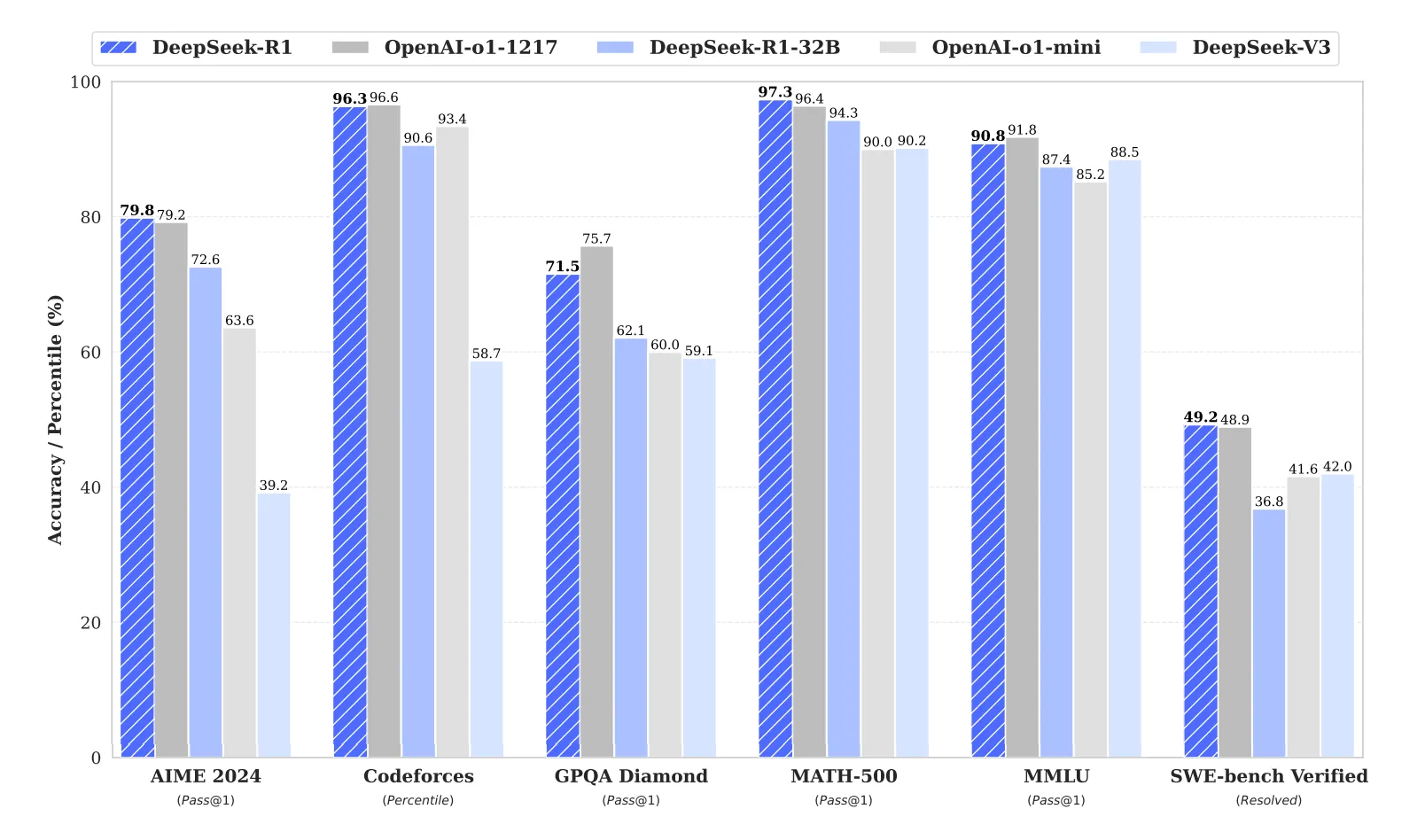
To fix this, DeepSeek introduced a small amount of cold-start data and designed a multi-stage training pipeline. This involved two RL stages to refine reasoning patterns and two SFT stages—used later in the process, rather than at the start. The model was then trained on a mix of reasoning tasks and more general skills like creative writing, factual question answering, and self-cognition. Crucially, unlike OpenAI’s approach, they only used selective fine-tuning and rejected bad outputs rather than micromanaging the model’s entire training.
DeepSeek also optimized for efficiency in ways that traditional AI labs haven’t. They didn’t constrain the model’s thought process, allowing it to freely develop problem-solving strategies, only enforcing accuracy and formatting rewards to keep its outputs readable and consistent. The result was a model that thinks more like a human approaching a problem, testing different approaches before finalizing an answer, and doing so with a far lower compute cost than anyone thought possible.
The final model, DeepSeek-r1, went through additional refinement, distillation, and reinforcement learning for helpfulness and harmlessness (though, interestingly, not for honesty). The paper suggests that they could have further improved performance through another RL stage, but they didn’t bother because the point was to prove the effectiveness of their training method, not to maximize raw power.
Perhaps the biggest takeaway here is that DeepSeek didn’t reinvent the wheel—they just did the simple things extremely well. Instead of brute-forcing improvements with ever-larger models, they showed that better reasoning can emerge organically from RL. This shifts the AI race in a new direction, away from just throwing compute at the problem and towards smarter, more efficient training methods.
The Immediate Fallout
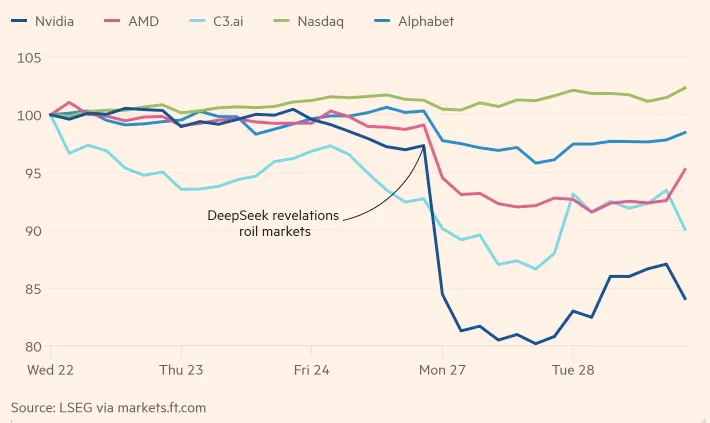
The Monday after r1’s release, the global markets shook as $1 trillion was wiped off the stock market in a single day. Nvidia, the company whose GPUs power almost all state-of-the-art AI models, took the hardest hit, with a 17% drop in its share price (which has since partially recovered). This was a stark reminder of how deeply the AI industry is intertwined with global finance, and how vulnerable it is to disruptive breakthroughs.
But the shockwaves weren’t confined to the stock market. The DeepSeek app surged to the top spot on the American App Store, unseating ChatGPT, and the media erupted with claims that this was AI’s “Sputnik moment”—a turning point that signaled China catching up to the US despite the limitations that the US has imposed on them to access state-of-the-art AI GPUs.
Sam Altman, OpenAI’s CEO, called r1 “impressive,” while Mark Zuckerberg, Meta’s chief executive, stated that DeepSeek had made “advances that we will hope to implement in our systems.” Yet, questions swirled around the model’s reported training costs. DeepSeek claimed that the final step for training r1 cost only $5.6 million, a fraction of the price tag for comparable models from OpenAI or Meta. However, this figure excluded many underlying costs, such as infrastructure and prior training, leaving room for skepticism about the full scope of the expenses.
Meanwhile, rumors of a hidden GPU cluster at DeepSeek began to circulate. U.S. trade restrictions, initially imposed during Trump’s first term and continued under President Biden, have banned China from acquiring Nvidia’s top-tier GPUs for AI training. Speculation mounted that DeepSeek had sidestepped these restrictions, potentially through domestic chip innovations or undisclosed acquisitions.
Later on, OpenAI and Microsoft launched an internal investigation to determine whether DeepSeek had somehow gained access to OpenAI’s proprietary training data. There were even rumors that the hedge fund backing DeepSeek had taken short positions on Nvidia stock before releasing the r1 model.
The Post DeepSeek World
The real consequences of DeepSeek go beyond fluctuations on the stock market. For a period, American AI companies held a significant lead over the rest of the world in developing state-of-the-art models. These were only a handful of companies with the expertise and financial backing to afford the GPU clusters required for building cutting-edge systems, and they themselves fueled this narrative, often referring to scaling laws for neural language models and arguing that more compute would lead to more intelligence.
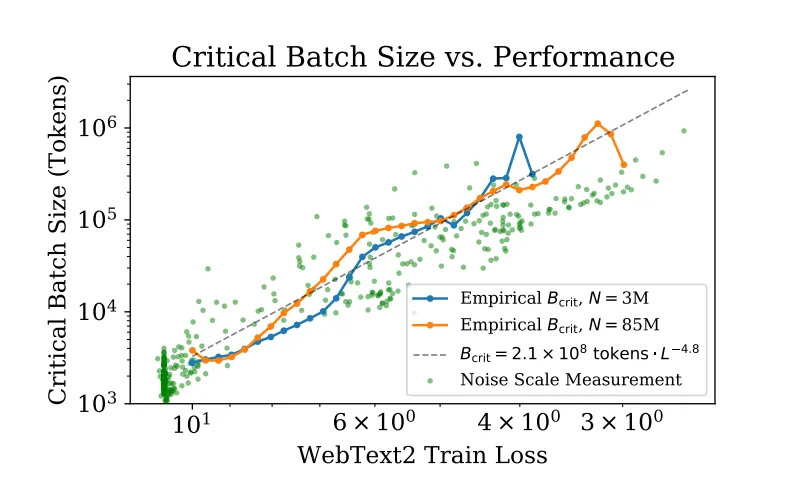
To some degree, these arguments still hold true. With the introduction of reasoning models, the cost of inference—the process of “thinking” to respond to a query—will continue to grow. What DeepSeek shows, however, is that there is massive potential to make these models more efficient. Due to the GPU purchase restrictions imposed on Chinese companies, they faced a constrained optimization problem: to build a model on par with state-of-the-art systems using significantly fewer resources. And they succeeded.
This is why comparing DeepSeek’s release to Sputnik goes too far. Sputnik was a moment of true panic in the Western world, as the U.S. immediately realized it was at least a decade behind the USSR in rocket technology. The case with DeepSeek is more complex: it produced a model on par with some of the best from American firms. The comparison to the Space Race, however, is apt. Much like the Soviet engineers under Sergey Korolev who competed with and sometimes outcompeted NASA despite fewer resources, DeepSeek’s achievement was born out of necessity—and ingenuity.
The surprise surrounding DeepSeek’s success, however, is as much about geopolitics and trade as it is about engineering prowess. After R1 was released, Dario Amodi, CEO of Anthropic, said: “Well-enforced export controls are the only thing that can prevent China from getting millions of chips, and are therefore the most important determinant of whether we end up in a unipolar or bipolar world.”
As a believer in open markets and free trade, I find this perspective shortsighted. While there are arguments that export controls can enhance U.S. national security, DeepSeek’s achievement has shown that no amount of trade barriers can stop China’s momentum in AI. The country’s decade-long investment in talent and resources is bearing fruit, making it clear that China will remain one of the dominant players in AI, if not the only other main player.
These trade barriers, instead of stifling progress, have forced China to become more self-reliant. This includes massive state investment in chip design and foundries. It is also likely that Nvidia chips have found their way to Chinese companies through less legal channels, prompting investigations by the U.S. Commerce Department. The number of GPUs available to Chinese labs remains veiled in secrecy, leading to potential miscalculations about their true capabilities.
Furthermore, many—including this author—believe that large U.S. AI companies are lobbying for stricter chip restrictions to protect their own financial interests. OpenAI, xAI, and Anthropic have all raised enormous sums in recent months to invest in GPU and compute infrastructure. If an obscure Chinese research lab can achieve comparable results with far less, it raises uncomfortable questions about how these U.S. developers are valued.
DeepSeek was founded in 2023 as a side project by hedge fund billionaire Liang Wenfeng. What sets DeepSeek apart from other Chinese AI startups is its independence from external financing. In an environment where state-owned funds dominate and startups feel pressured to deliver quick returns, DeepSeek has remained a research lab, focused entirely on developing advanced AI models.

Although questions can be raised about the degree to which any company in China is truly independent of state influence, it is far better—both for practical reasons and in support of free and open competition—to allow an open race in developing AI models. Forcing your strongest opponent to operate in the shadows creates a dangerous scenario where they can blindside you with innovations while you mistakenly believe you’re running a solo sprint. Recognizing the race and performing at the highest level is the only way to stay ahead.
The Open Question
Another important aspect of the DeepSeek r1 release has been that it was completely open-sourced. This means that anyone with the right amount of compute power can replicate their work or download their models to run locally.
In the U.S., Meta has been the only serious actor pushing a similar agenda, though even they have yet to release a reasoning model. By openly sharing their work and showing the thought process of the model, DeepSeek has allowed users to better understand how reasoning models function, enabling them to use these models more efficiently and improve their prompting strategies for better results.
Moreover, this open release provides a blueprint for smaller AI companies worldwide to build models of their own. While this might not immediately help Europe’s fumbling AI initiatives, it gives startups a chance to compete, leapfrog, or even displace the AI giants. As Marc Andreessen, a renowned tech investor, pointed out, this kind of openness could level the playing field and spark a wave of innovation from smaller startups.
The immediate impact of this is clear: the global competition to develop top-tier AI models will intensify, driving innovation forward at an even faster pace. Simultaneously, as these models become more accessible, the cost of using AI for consumers will drop, ultimately benefiting users around the world.
Additionally, the narrative around AI pricing has largely been driven by OpenAI, the leading U.S. AI company, which recently introduced a $200 per-month Pro tier for access to their best models. Yet, only a few days after r1’s release, OpenAI expanded access to their best models for both their free and $20 per-month Plus tiers. DeepSeek r1 has cracked the glass paywall that U.S. AI companies were building around AI compute pricing.
The 3 Trillion Dollar Question
A term which has shot up in use since R1’s release has been Jevons Paradox. Which argues that when technological advancements make a resource more efficient to use (thereby reducing the amount needed for a single application), the cost of using the resource drops. However, as demand rises, total resource consumption increases, contrary to expectations.
In 1865, the English economist William Stanley Jevons observed that technological improvements increasing the efficiency of coal use actually led to increased coal consumption across industries. He argued that, contrary to intuition, technological progress could not be relied upon to reduce fuel consumption.
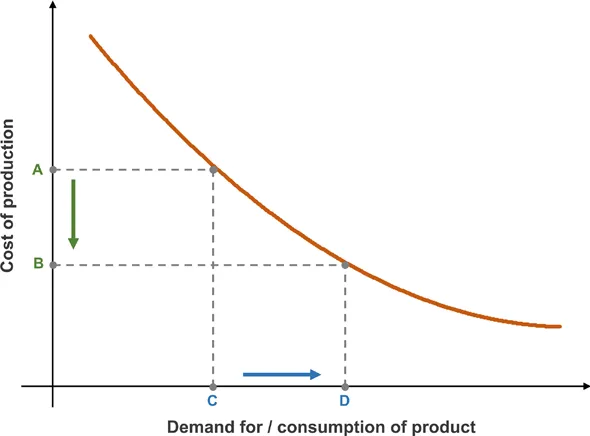
The company most significantly affected by DeepSeek’s release has been Nvidia. For a long time, analysts believed (always a worrying phrase to read) that the AI race was a gold rush, with Nvidia the only real shovel-maker in town. Tech giants poured billions of dollars into competing for Nvidia’s newest and shiniest chips to develop the next-best model. But suddenly, DeepSeek has revealed that the shovels already purchased might be enough to go much further than anticipated.
This revelation was not entirely a shock, as implementations of older AI models like GPT-2 on far less compute than it took to develop them initially were well known. While it remains true that having access to the latest Nvidia GPUs can give a developer a two to three month edge in building the latest models, r1 demonstrates that even the most advanced models can be developed with constrained resources through beautifully executed optimization.
The argument about Jevons Paradox, however, becomes more relevant with the introduction of reasoning models. Their RL-loop thought process demands far more computation to process and “deliberate” (anthropomorphized here to describe their iterative approach to problem-solving) before reaching a final answer.

What DeepSeek’s sudden rise, affordability, and promotion of open-source competition mean is that even more people will start relying on LLMs in their daily lives, driving the demand for compute necessary for inference ever higher. This doesn’t necessarily mean Nvidia will remain the ultimate provider of AI chips, as many startups and tech companies are already developing inference-optimized chips. However, Nvidia’s CUDA programming language, now the industry standard for GPU programming, and its integrated systems give it a significant edge.
Ultimately, as AI becomes integrated into daily life, the need for chips will only increase. And, as with the efficiency of steam engines and the subsequent rise of transport, no one ultimately cares about which company stays on top. The most important effect will be the benefits to consumers. Post-DeepSeek, we will have more models with varying capabilities and price points, integrating AI into personal and professional lives in ways we’re only beginning to imagine. Ten years from now, no one will care if Nvidia retains its dominance, but they will care about how much AI improves their lives.
The Ultimate Tech Race
All and all DeeSeek’s r1 has opened a whole new path of fantastic oppurtunities and possibilities for humanity and could one they be regarded as the official start of the AI race that led to significant jumps in AI capabilities.

Appendix A: What Is Reinforcement Learning (RL)?
Reinforcement Learning (RL) is a method where an AI model teaches itself by interacting with an environment and receiving rewards for good outcomes. Think of it like training a dog—if the model makes a correct decision, it gets a reward; if it makes a mistake, it doesn’t. Over time, it figures out which behaviors lead to the best results.
One famous example of RL in AI is AlphaGo, the model that beat the world’s best Go players. Instead of being fed strategies from human players, AlphaGo played against itself millions of times, gradually discovering new techniques that no human had ever thought of.
Appendix B: What Is Supervised Fine-Tuning (SFT)?
Supervised Fine-Tuning (SFT) is the traditional method of improving AI models—it involves feeding them hand-labeled data to teach them how to respond in specific scenarios. This is how models like GPT-4 were trained to write essays, answer questions, and reason through problems.
The downside of SFT is that it’s expensive and time-consuming—it requires large teams of annotators, massive datasets, and extensive training runs. It also limits creativity, as models tend to stick to what they’ve been explicitly trained on rather than exploring new strategies.
Related
- DeepSeek-R1: Incentivizing Reasoning Capability in LLMs via Reinforcement Learning
- Scaling Laws for Neural Language Models
- Jevons Paradox
- Constrained Optimization
- Article: Nvidia is in danger of losing its monopoly-like margins
- Article: The global AI race: Is China catching up to the US?
- GitHub Repo: TinyZero